

AI Will Change Work. Panic Won't Help
March 21, 2026
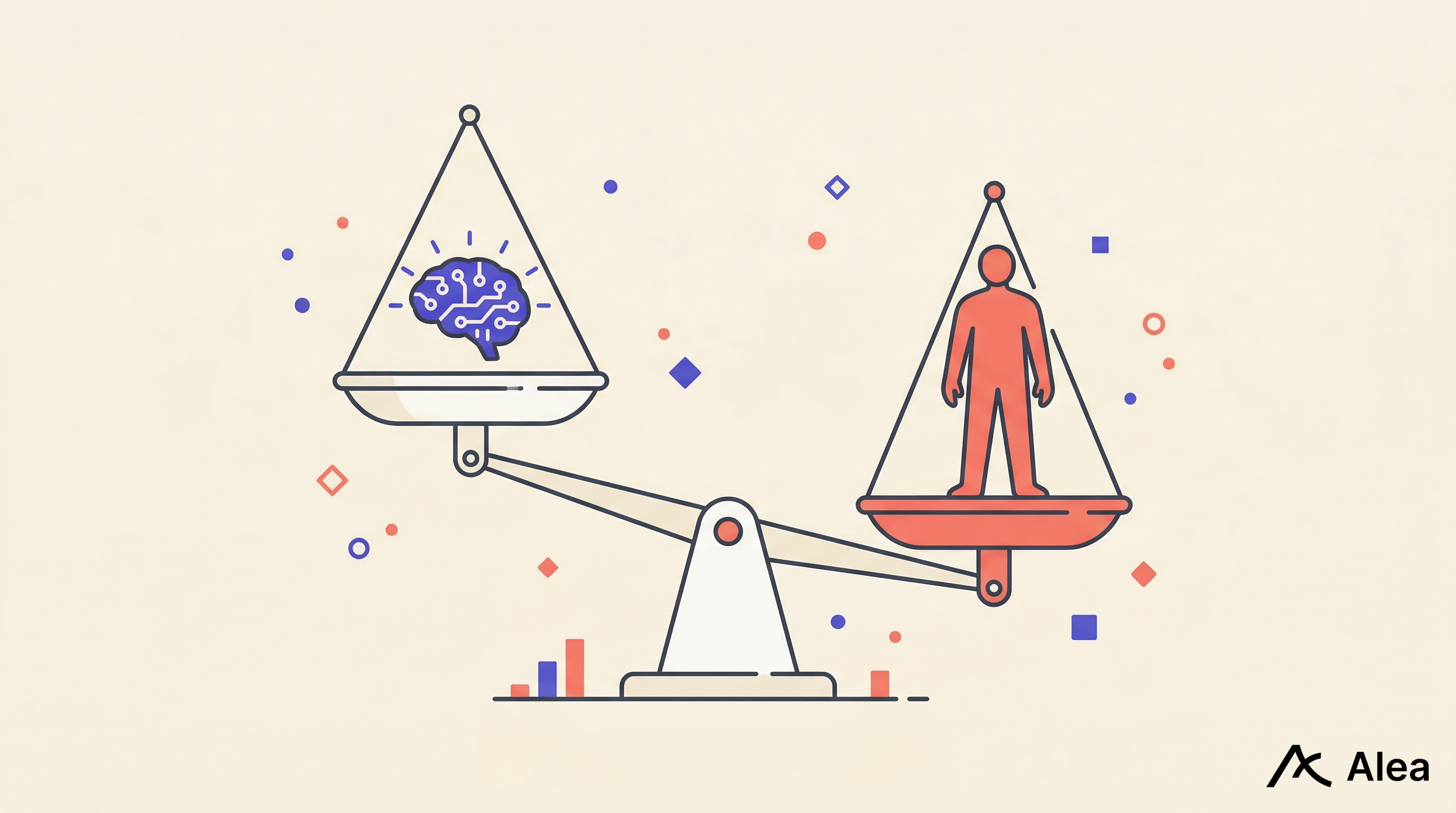
A lot of AI job-loss talk is selling certainty the data hasn't earned. AI is real, and some entry-level knowledge-work hiring probably is getting tighter. But the best evidence still points to task reshuffling, uneven pressure, and slower hiring in some exposed roles, not instant mass uselessness. The ILO says 1 in 4 workers are in occupations with some generative AI exposure, while also saying most jobs are more likely to be transformed than made redundant. Anthropic and Yale both find no clear broad unemployment shock yet in the most-exposed parts of the labor market. (International Labour Organization)
Keep 5 distinctions in your head.
- Jobs are bundles of tasks.
- Real rollouts matter more than flashy demos.
- Exposure measures pressure, not destiny.
- Hiring signals tell you more than panic.
- Output artifacts capture only part of a worker's value.
Job-Loss Panic Is Running Ahead of the Evidence
- Exposure is real. The ILO's 2025 update says 1 in 4 workers globally are in occupations with some degree of generative AI exposure, and it explicitly says most jobs are more likely to be transformed than made redundant. It also notes that better voice, image, and video systems have raised exposure for some media and web roles. (International Labour Organization)
- Use is wide, not total. Anthropic's Economic Index found AI use in at least a quarter of tasks for roughly 36% of occupations, but only about 4% of occupations showed use across three-quarters of tasks. In the same data, assistance slightly outweighed full task handoff, 57% to 43%. (Anthropic)
- White-collar workers do have reason to pay attention. OECD says tertiary-educated workers in white-collar jobs likely face disruption because AI can automate some analytical, text-heavy tasks that used to resist automation. The same paper also says the evidence still does not show overall employment falling due to AI, even in white-collar work. (OECD)
- Broad labor-market rupture is not visible yet. Yale says the U.S. labor market has not shown discernible economy-wide disruption 33 months after ChatGPT's release. Anthropic likewise finds the unemployment gap for the most-exposed occupations has been small and statistically indistinguishable from zero so far. (The Budget Lab at Yale)
- The crack to watch is entry-level hiring. Anthropic finds a tentative 14% drop in job-finding rates for 22 to 25 year-olds entering highly exposed roles. Payroll-based work from Stanford points in the same direction, showing employment declines for 22 to 25 year-olds in AI-exposed jobs. (Anthropic)
- Vulnerability is not spread evenly. A 2025 NBER chapter estimates that 4.2% of the U.S. workforce is both highly exposed and low in adaptive capacity, meaning weaker ability to handle a forced job transition. That group is concentrated in clerical and administrative support roles. Many highly exposed professional workers still have stronger transferable skills and more room to adjust. (NBER)
- Executive surveys point to change, not a clean wipeout. In a 4-country survey of senior executives in the U.S., U.K., Germany, and Australia, the average expected employment effect of AI over the next 3 years was -0.68%. The World Economic Forum, meanwhile, says 77% of employers plan to upskill workers, while 41% expect workforce reductions where AI automates certain tasks. (NBER)
That is enough to take the technology seriously. It is not enough to hand your nervous system over to every apocalypse thread, every earnings-call boast, or every founder with a dramatic range like "1 to 3 years."
Manufactured Uselessness
- Composition fallacy: 1 task gets cheaper, so the whole profession gets declared dead.
- Base-rate neglect: People forget how slowly firms change software, policy, procurement, and org design.
- Availability bias: A vivid demo or layoff memo beats boring labor data in the mind.
- Authority bias: A billionaire says it, so it sounds like measurement.
- False precision: Huge numbers and wide timelines get dressed up as exact forecasts.
- Linear extrapolation: Last year's model curve gets extended straight through every job and every firm.
- Category error: Text generation gets treated as the same thing as judgment, accountability, trust, and decision rights.
A lot of fear talk grabs the cheapest, most repeatable slice of your job and pretends that slice was the whole contribution.
Some warnings are sincere. Some are strategic. You do not need to read minds to protect yourself. You just need a better filter.
The Rhetoric of Replacement
- Your entire value gets reduced to output speed.
- The model's best pass gets compared to your average Tuesday.
- A polished demo gets compared to your full week of messy work.
- Doubt gets framed as stupidity, and panic gets framed as intelligence.
- You get nudged to confuse "I use a keyboard" with "my whole value is typing."
This is how people start feeling useless before the labor market has even moved much. The story lands in the body first. You feel smaller, more replaceable, more generic. That is exactly when you need to zoom back out and ask what the actual job contains.
AI Can Draft the Memo. You Still Own the Call
Knowledge workers feel singled out because AI is unusually good at the visible surface of laptop work. It drafts, rewrites, summarizes, codes, formats, searches, and makes slides. Anthropic's usage data is concentrated in software development and technical writing, and current use still tilts more toward assistance than full replacement. OECD's view is similar: white-collar disruption is real, but the employment collapse many people fear has not shown up broadly in the data. (Anthropic)
The job includes the memo, the meeting, and the deck, plus framing the question, loading the right context, spotting the missing assumption, handling edge cases, persuading other humans, and owning the call when the answer goes wrong. That harder layer is where a lot of value sits.
And the best workplace evidence often looks more like leverage than erasure. In a study of 5,179 customer-support agents, access to a generative AI assistant raised productivity 14% on average and 34% for novice and lower-skill workers. The system helped newer workers absorb the patterns of stronger ones faster. (NBER)
Fear Sells Faster Than Labor Data
- Audit your job at the task level. Make 3 columns: automate, accelerate, own.
- Move closer to the layer that carries accountability. Revenue, customer context, risk, compliance, prioritization, and decision rights age better than pure formatting.
- Learn 2 or 3 real workflows deeply. Research triage, first-draft writing, meeting prep, spreadsheet cleanup, code review, ticket handling.
- Keep proof. Save before-and-after examples that show faster cycle time, lower error rates, or better output.
- Protect apprenticeship. If you're junior, manufacture reps on purpose. Draft first, then compare against the model. Do not outsource the learning loop.
- Use AI to widen output, not hollow out judgment.
- Keep your identity out of the cheapest part of your job.
- Limit doom intake. 1 serious report beats 50 hot takes.
Based on the current exposure patterns, office workers will feel AI first in first drafts, reporting, formatting, and repetitive analysis, while many frontline roles will feel it first in paperwork, routing, documentation, and customer intake. The admin layer tends to move before the core human responsibility. (International Labour Organization)
A blunt rule helps here: if a tool removes 30% of the drudgery from a job, use that relief to climb toward the 70% that still needs judgment. That is where bargaining power usually migrates.
Everyone Wants to Declare You Replaceable
- Which tasks, exactly?
- At what error rate?
- In which workflow, with which approvals?
- What changed in actual hiring, budgets, or output?
- Who owns the mistake when the model is wrong?
- If the agent still needs a browser, what exactly died?
AI is real. So is hype. Separate task change from job loss, scenario from evidence, and rhetoric from self-worth. The cheaper the keystroke gets, the more value shifts to judgment, context, and responsibility. Stand there.