

Dispatch vs OpenClaw: Remote Access Meets Autonomous Agent
March 20, 2026
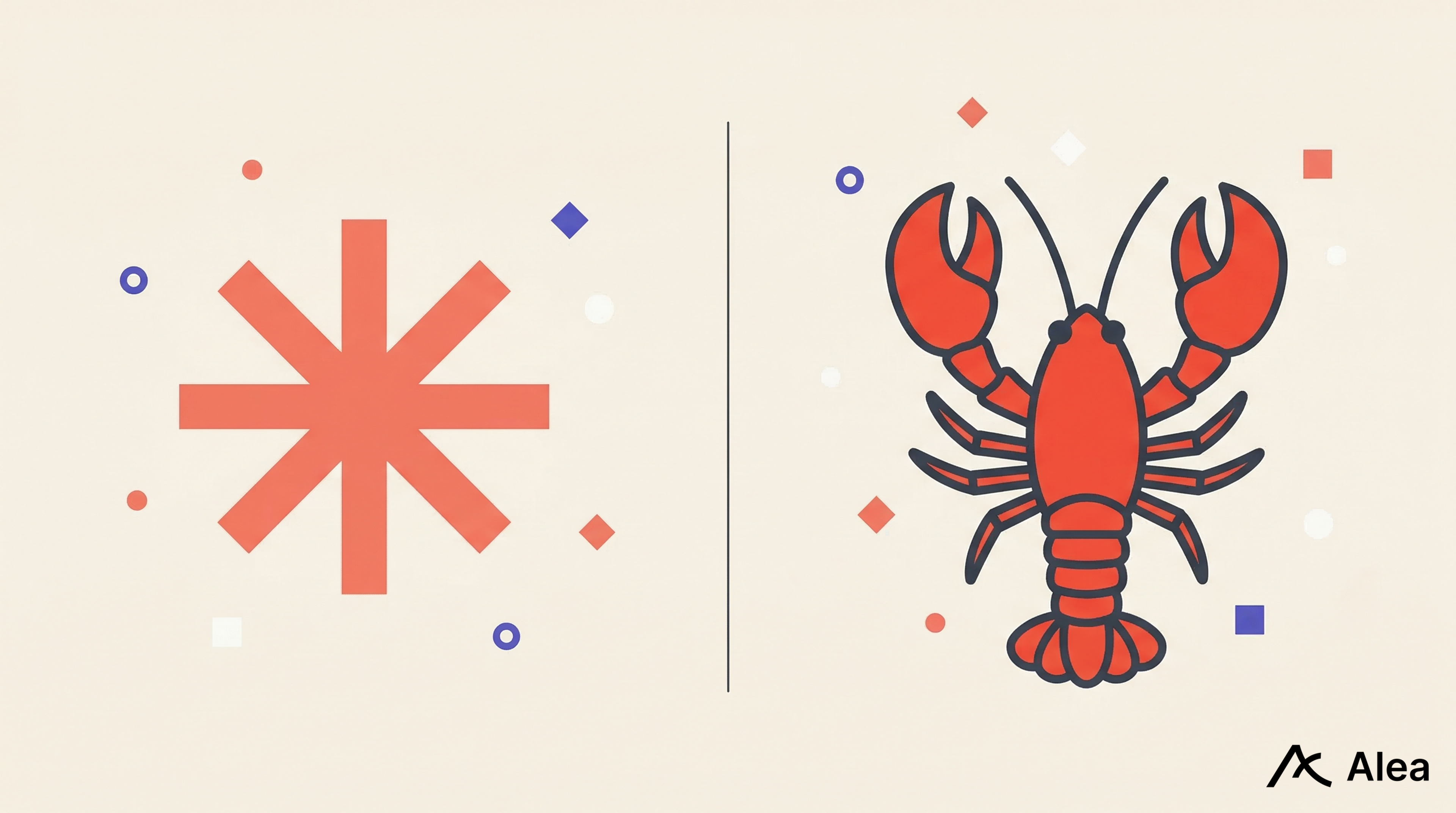
Anthropic shipped Dispatch on March 17, adding phone access to Cowork, the agent runtime inside Claude Desktop. The launch landed in the middle of a broader conversation about OpenClaw and what it means to have an AI agent that works on your behalf.
The two products look similar from a distance. Both let you message an AI from your phone or remotely when you are away from your computer and have it do real work: process files, search inboxes, run tasks. But the architectures underneath point in different directions. Dispatch is remote access to a local machine. OpenClaw is an autonomous agent runtime that can act on its own schedule across multiple messaging channels.
TL;DR
- Dispatch gives you phone access to Cowork, the agent runtime inside Claude Desktop. OpenClaw is a self-hosted agent runtime that can act on its own schedule.
- Dispatch handles reactive tasks well: summarize a file, search Slack, process a folder. OpenClaw handles proactive ones: scheduled briefings, recurring automations, and messaging you first.
- Claude Code skills, CLAUDE.md, and custom workflows do not carry over to the Cowork sandbox that Dispatch controls. This limits what Dispatch can do for anyone who depends on custom workflows.
- Dispatch's gap is capability. OpenClaw's gap is setup complexity.
What Dispatch Actually Is
Dispatch connects your phone to your computer through Anthropic's servers. Open Claude on your phone, type a task in the Dispatch thread, and Cowork, the agent runtime inside Claude Desktop, runs it on your machine using whatever folder and connector permissions you already granted.
The work happens locally. Your computer must be awake with Claude Desktop open, and both devices need internet. A "Keep awake" toggle and an "Allow all browser actions" toggle are available in Dispatch settings, both off by default.
The Dispatch thread is one continuous conversation, so there is no way to separate projects into different threads. Claude will not proactively message you, there are no completion notifications, and scheduled tasks are not supported inside the Dispatch thread. Cowork does have separate scheduled tasks, but those also require the desktop to stay awake and Claude Desktop to stay open.
Early users found that retrieval and summarization tasks worked well, while app-driving and deeper cross-app actions often failed. Dispatch works best when the data already lives on your machine and you need it processed, summarized, or organized.
What OpenClaw Actually Is
OpenClaw works differently. Instead of relying on a desktop app, OpenClaw runs a central server (called a Gateway) that stays on and connects to the messaging apps you already use: Telegram, WhatsApp, email, webchat, or Signal. You can host the Gateway on a VPS, a Mac Mini, a Raspberry Pi, or any device that stays on.
Where Dispatch waits for you to send a message, OpenClaw can act on its own. Scheduled tasks, recurring automations, and regular status checks are built in. The agent can message you first through Telegram or WhatsApp. On a device that stays on, it runs around the clock. You configure what it monitors, when it runs, and how it responds.
OpenClaw also gives you model choice. You can use your existing Claude Max or OpenAI Pro subscription, connect API keys, or run local open-source models through Ollama. Your agent configuration lives in your filesystem, persists where you put it, and stays under your control. Worth noting: Anthropic could tighten restrictions on using Claude models through OpenClaw in the future, but for now it works.
One thing worth clarifying: "self-hosted" describes the runtime and orchestration layer, not the AI model itself. Unless someone runs a local model, prompts and data still flow through whichever provider they chose. The privacy advantage is in controlling what the agent does and when, not in keeping data entirely off the cloud.
The tradeoff is setup effort. Getting OpenClaw running is one thing. Getting it running well, with the right configuration, the right messaging channels, and the right scheduled tasks, takes experimentation. The architecture is capable once configured, but getting there is where most non-technical users stall.
What Dispatch Cannot Access
Skills built in Claude Code do not carry over to Cowork. Custom workflows, writing guidelines, automated tasks, and the persistent memory file (CLAUDE.md) that Claude Code reads for your preferences and project context are all unavailable when you use Dispatch from your phone.
We tested this directly. A skill that runs daily from Claude Code, one that fetches news, categorizes articles, and sends a briefing to Telegram, could not be found by Cowork at all. The Cowork sandbox also blocks outbound network requests, so any skill that calls an external API will fail even if you manage to set it up there.
Skills can be created inside Cowork separately, but the process is not as straightforward as Claude Code. There is no way to sync or import existing skills. Each one has to be rebuilt through Cowork's own skill creator or bundled into a plugin. And even after that effort, user-created skills in Cowork are stored in temporary directories and silently deleted when the session ends. No warning, no backup.
This is a real limitation for anyone who uses skills to define how work gets done. Skills encode quality standards, review steps, output formats, and guardrails. Without access to those, Dispatch handles file processing and summarization well but cannot run the workflows that many Claude Code users have come to depend on.
OpenClaw has a different version of this problem. Setting up the full agent configuration takes effort and experimentation. But once configured, those files persist where you put them and do not get silently deleted. The tradeoff is setup time versus knowing your configuration will still be there tomorrow.
Where Each One Wins
The simplest way to think about the split: Dispatch is reactive, OpenClaw is proactive.
Want to give your AI a task from your phone right now? Dispatch. Open Claude, type the task, the work happens on your desktop. No bot tokens, no VPS, no channel debugging. Works well for summarization, file processing, and Slack or email search where you initiate and the data is already on your machine.
Want to make a quick code change while away from your computer? Dispatch can handle simpler edits. Cowork was built as Anthropic's way for non-technical users to get Claude Code capabilities without using a terminal. But if you rely on specific guidelines or quality standards set up as skills in Claude Code, those will not be available through Dispatch unless you rebuild them in Cowork first.
Want your AI to do something on a schedule without you asking? OpenClaw. A daily 7am briefing to Telegram. PR review notifications pushed to chat. Research reports that arrive on their own. Scheduled tasks that fire whether or not you are looking at a screen. Dispatch does not support proactive messaging or scheduled tasks in the Dispatch thread.
Want the AI to remember your preferences and use your custom workflows? OpenClaw, with caveats. Your agent configuration persists and your skills stay installed. But setup takes more effort and you carry the maintenance. Cowork cannot read CLAUDE.md or access Claude Code skills today.
Want the simplest possible setup with the least risk? Dispatch. Anthropic gives you an official app flow, explicit permissions, and approval gates. OpenClaw puts the entire trust and security boundary in your hands.
The philosophical split underneath is worth stating plainly. Anthropic asked how to make an agent safe enough that anyone can use it. OpenClaw asked how to make an agent capable enough that technical users can own it. The two questions lead to very different products, and neither has fully answered theirs yet.
Where This Breaks
Dispatch:
- If your computer sleeps or Claude Desktop closes, Dispatch stops working with no notification. The "Keep awake" toggle helps but does not cover forced closures or restarts.
- The sandbox blocks outbound network requests. Any workflow that calls external APIs will fail.
- One Dispatch thread only. No way to separate projects or contexts.
- Skills and CLAUDE.md from Claude Code are not available, as covered above.
OpenClaw:
- Scheduled tasks and messaging channels can break after updates, and fixing them means going back into the configuration to figure out what changed.
- Multiple projects on a single Gateway can slow each other down. The Gateway processes events through a single loop, so a heavy task can block lighter ones.
- Security patches are part of the maintenance. Two vulnerabilities were patched in March, and staying on top of updates is necessary.
- The setup investment is ongoing. Even after the initial configuration works, expect to revisit and tweak it over time.
Both products are early. Dispatch tends to surprise you with things that quietly do not work. OpenClaw tends to require ongoing attention to keep things running the way you set them up.
What Comes Next
Anthropic has shipped quickly. Cowork launched in January, followed by plugins and admin controls in late February, Excel and PowerPoint integration on March 11, and Dispatch on March 17. If that pace holds, skill portability between Claude Code and Cowork is a reasonable next step. Separately, Claude Code already has a remote control feature that lets developers connect to a running session from another device through the terminal, where skills and CLAUDE.md do work. That is a different path than Dispatch, aimed at technical users rather than the broader Cowork audience.
OpenClaw will likely continue simplifying setup, but it will still require users to understand what they want to build before they can configure it.
If Anthropic lets Cowork and Dispatch access the same skills and memory as Claude Code, the gap closes fast and most mainstream users will not need OpenClaw. If OpenClaw makes setup significantly easier, Dispatch loses its main advantage: simplicity.
Dispatch is the simpler path when the task is reactive and the data is on your machine. OpenClaw is the path when the task is proactive, scheduled, or depends on custom workflows. Both are early. The product that closes its gap first, capability for Dispatch or setup complexity for OpenClaw, will likely define how most people work with AI agents over the next year.
Try both if you can. The differences become obvious quickly.